
The Nature of Dissatisfaction
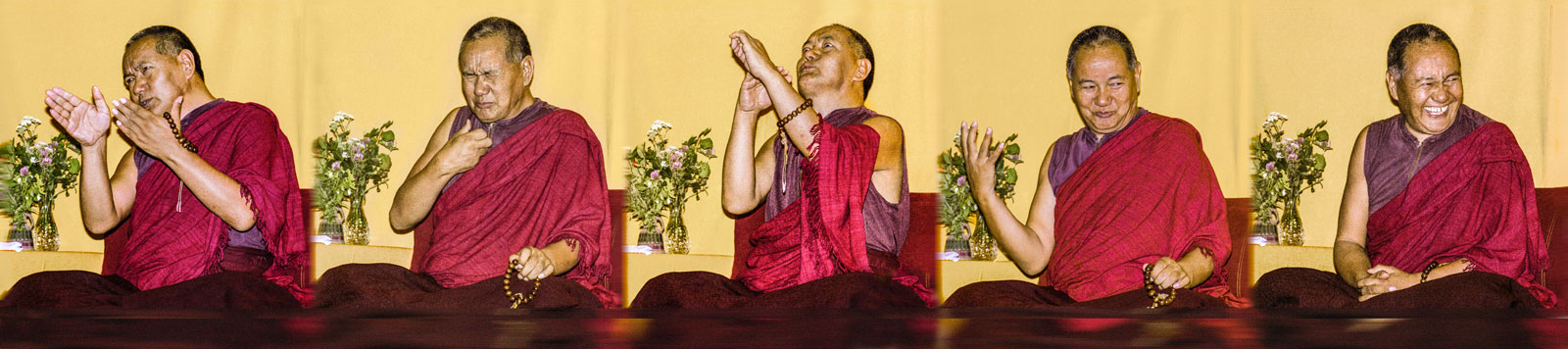
Lama Yeshe's teaching on suffering is excerpted from a public talk on the four noble truths given at Kew Town Hall, in Melbourne, Australia, July 19, 1977. This teaching is published in chapter 15 of Big Love: The Life and Teachings of Lama Yeshe.

For the most part, we all understand the superficial kinds of suffering such as when someone has a headache or is crying. We say, “Oh, he is suffering so much.” But we are not aware of the true suffering—the disturbances, conflict and dissatisfaction that pervade the mind. It is hard to understand the nature of true suffering.
Suffering is much more than having a headache or bleeding when one is injured. That kind of suffering is easy to comprehend. The most fundamental kind of suffering is the pervasive dissatisfaction we all experience in our lives. You may be wealthy, beautiful or powerful, it doesn’t matter. Dissatisfaction is still there, all the time, day and night. This is true suffering. It doesn’t matter if you are walking, dancing, laughing or even if you are totally embracing life. As far as suffering is concerned, there are no distinctions among human beings.
The cause of dissatisfaction is a lack of wisdom, not knowing the reality of true suffering. This is the basic human problem. We should reflect on the nature of dissatisfaction and examine what creates the causes of suffering. Many Western people think, “I’m happy! Why should I think about suffering? I don’t want to talk about suffering, dissatisfaction and confusion. I have everything.”
But if you really check up carefully, every one of us is connected with another person, another sentient being. We share this planet with millions of other living beings. And in those relationships with others, we experience confusion and dissatisfaction. We want to be happy, but it is difficult.
It doesn’t matter if you are in a specific relationship with another person or not. Every human being wishes to be happy and not to suffer. This exists equally in all of us. Whether you are a religious person or not, you have some kind of concept, some idealistic idea in your mind of what will make you happy and what will make you unhappy. We all have this idea. Even children have such ideas, even before they can put them into words. These likes and dislikes are intuitive. All human beings are busy trying to solve their problems in order to be satisfied and happy, motivated by an intuitive sense of “I want, I want, I want.”
So the question becomes, what is the solution to this? How to bring about human satisfaction? This is the question. And we really don’t know the answer to this. Instead, we hypnotize ourselves into thinking that no problem exists. But this is totally unrealistic. It is just a mistaken opinion. If you are realistic and thoroughly examine your life—how much satisfaction you actually have in your life—you will come to understand, rather than hypnotizing yourself into believing a mistaken hallucination. If we really check up, we will come to understand that the desire to be happy and to avoid suffering is a basic characteristic of all human beings.
In addition, by not understanding that the root of our confusion and dissatisfaction is not outside of us but is within, that it is a part of our mind, we then make wrong judgments and come to mistaken conclusions. Even if you are not a philosopher, you still have this instinctive philosophy within you. It is important to examine your thinking carefully to detect this kind of mistaken philosophy so that you can correct it, eliminate it; so that you can cut the wrong conception that is the main cause of suffering.