
E-letter No. 271: January 2026

Dear Friends,
We hope you are safe and well. Thank you for your patience and incredible generosity during our 2025 year-end campaign. Because of your wonderful support, we raised $42,000! We are deeply grateful for your kindness and continued connection to this work.
In this issue, we’re happy to share a new video excerpt of Lama Yeshe advising students on the practice of refuge, along with a new podcast featuring Lama Zopa Rinpoche teaching how to cultivate patience with enemies. We’ve also published several new teaching excerpts from Big Love on our website, added a new Portuguese translation of a popular LYWA title, and included updates to the 3rd & 4th Kopan Meditation Courses ebook. And be sure not to miss this month’s teaching on the Mahayana equilibrium meditation practice by Lama Zopa Rinpoche!
From the Video Archive: The Practice of Refuge
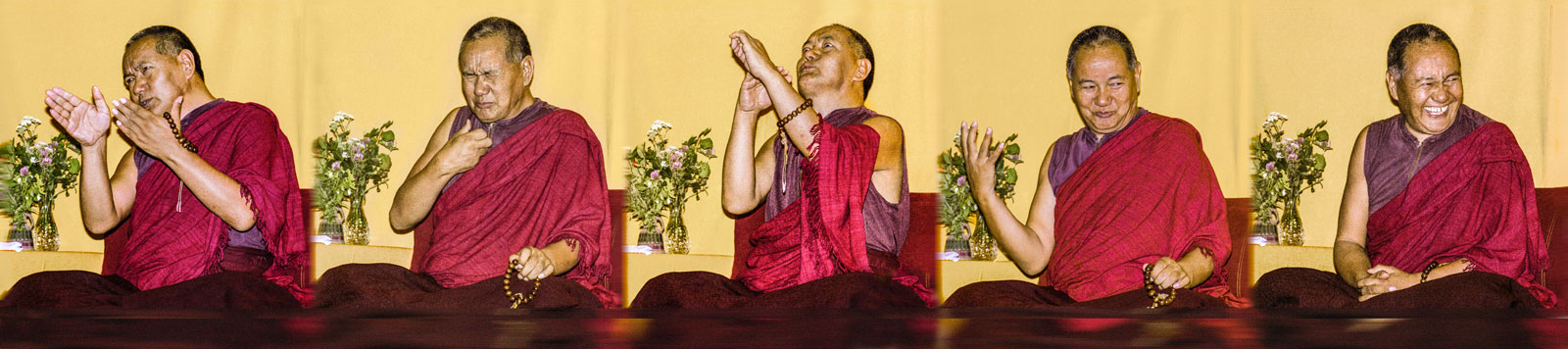
This month from the video archive, Lama answers students' questions about the meaning and purpose of taking refuge, in an excerpt drawn from extensive teachings given in Holland in 1980. Please don’t miss watching the full set of teachings on the LYWA YouTube channel.
Visit and subscribe to the LYWA YouTube channel to explore our complete video collection of teachings by Lama Yeshe and many from Lama Zopa Rinpoche, available from our archive. For many more videos of Lama Zopa Rinpoche's teachings, visit the FPMT YouTube channel.
On the LYWA Podcast: The Enemy is the Kindest Person
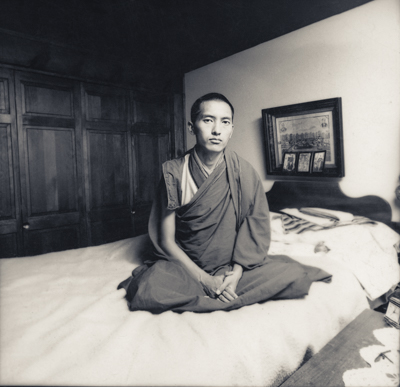
How can I practice patience if no one gets angry with me? How will I find the opportunity to develop my mind in patience? This opportunity is completely due to the kindness of the person who is angry at me.
—Lama Zopa Rinpoche
This month on the Lama Yeshe Wisdom Archive podcast, Lama Zopa Rinpoche explains why it is so important to practice patience with those who wish to harm us and with those who are angry with us. Rinpoche gave these teachings at the Thirty-third Kopan Meditation Course, held at Kopan Monastery, Nepal, in 2000. Listen along with the transcript on our website.
The LYWA podcast contains hundreds of hours of audio, each with links to the accompanying lightly edited transcripts. See the LYWA podcast page to search or browse the entire collection by topic or date, and for easy instructions on how to subscribe.
What's New On the LYWA Website
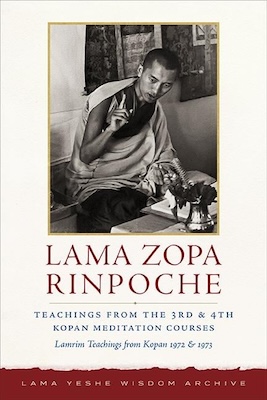
This month we are happy to share an updated presentation of Lama Zopa Rinpoche's teachings from the 3rd & 4th Kopan Meditation Courses, held in October-November 1972 and March-April 1973. The lightly edited lectures present the path to enlightenment in Rinpoche’s unique, spontaneous and intimate teaching style. You can order the ebook from your favorite vendor, read it online, or download a PDF. LYWA Members can download the ebook for free.
Visit the Kopan eBook Series to find links and short descriptions for all Kopan ebooks published to date, each edited by Gordon McDougall. You can also read more Kopan courses online and download them as free PDFs.
We’ve also added two new teachings from Lama Yeshe, excerpted from Big Love: The Life and Teachings of Lama Yeshe. In our first excerpt, The Wisdom of Renunciation, Lama Yeshe explains that we must use our wisdom to check up on the best way to produce happiness in our lives. In the second teaching, The Source of Satisfaction, Lama Yeshe explains that our experience of life is shaped primarily by the mental attitudes we cultivate.
Visit our new Big Love Teaching Excerpts webpage, where you’ll find a growing selection of teachings featured in the book. The teachings are organized by chapters, with easy navigation links. Be sure to check back often, as we’re adding new content every month!
We’re also happy to announce the release of a new Brazilian Portuguese translation of The Perfect Human Rebirth by Lama Zopa Rinpoche. This edition was published by the Translators Group at Centro Shiwa Lha, the FPMT center in Rio de Janeiro, Brazil. You can download the free PDF here.
FPMT’s 50th Anniversary and an Opportunity to Offer Service
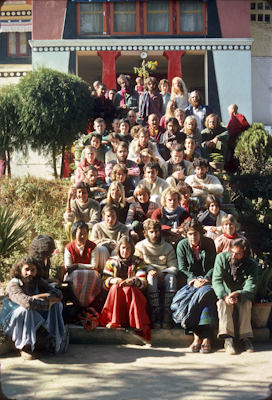
This year marks the 50th anniversary of the Foundation for the Preservation of the Mahayana Tradition (FPMT), now comprising 133 centers, projects, services, and study groups around the world. We invite you to learn more about how it all began and check out our multimedia presentation on Nick’s story, Fifty Years of FPMT: A Personal History.
The FPMT North America Regional Office is seeking a part-time Regional Coordinator to support connection and collaboration among FPMT’s twenty-seven North American centers, projects, services, and study groups. The coordinator will foster harmony and shared purpose through clear communication, well-organized programs, and attention to both spiritual and operational needs. You can find more information about this position here or visit their website for upcoming teachings and more service opportunities.
Thanks so much for being part of our community and for all your support throughout 2025. We look forward to the year ahead and wish you a 2026 grounded in inner peace and ease.
Big love,

Nick Ribush
Director and the LYWA team
THIS MONTH'S TEACHING: THE Mahayana equilibrium meditation

We always talk about peace: peace in our family, in our society, in our country, in the world, but how can we achieve world peace? When we consider peace we focus on these sorts of groups, but each group wants peace on their terms. Their peace will almost certainly clash with the peace of another group, whether that’s within a family, in a society or within two countries. To ensure their kind of peace, in order to stop others destroying their peace, they create weapons of war. And yet none have the power to bring peace, either individually or within the group or the country, or for all sentient beings. Because these things are not done in accord with the Dharma, they never bring peace.
The practice of the Mahayana equilibrium meditation, however, can really bring peace. First, we ourselves gain peace, and then with our own experience of perfect peace, with perfect power and understanding, we can enlighten all parents, relatives, societies, populations, all humans, even all sentient beings, leading them to the highest, perfect peace.
Even if we haven’t achieved perfect peace, the mind that is living in the practice of subduing the unsubdued mind, the cause of suffering for ourselves and others, helps other people a great deal. The practice does these things at the same time. It subdues the unsubdued, negative mind; it creates great merit, fertilizing the mind like a precious crop; and it helps others overcome their suffering. Wherever someone living in this practice travels, for all those that they encounter, there are less problems and fewer enemies, there is less suffering.
Our enemy is only created by our unsubdued, negative mind. Because this practice subdues the negative mind, we don’t create problems for others—for our parents, our children or any others. Wherever we go, no matter which countries, we are always considerate of people, wisely helping others, never creating problems due to partiality for friend and enemy.
When we live with a feeling of partiality, there will always be problems. We see somebody we don’t like and an argument develops. It gets bigger and bigger, more people get involved—different castes, different groups. Because of our prejudice, we confront other elements of our society we don’t like and there are huge problems. If it’s on the scale of country to country, there will certainly be wars. This is all due to the partial mind.
Even if we were the only human being on this earth, would we be at peace? We might have killed every other person to be rid of our enemies, but there would still be no peace because the principal cause, the unsubdued mind, has not been eliminated.
If just eliminating enemies can bring us peace, then the astronauts who landed on the moon should have achieved perfect peace because they were completely alone in that world. But real peace is the cessation of greed, hatred and ignorance. Peace doesn’t depend on the place or on being alone.
When we can live in the practice of equanimity, we become a person that everybody likes. With our very positive personality, because we don’t foster any thoughts of greed, ignorance or hatred, we don’t create problems. If we had attachment to one person, that would mean disliking another, whoever it is who dislikes our friend. Seeing our attachment, they would naturally become jealous and feel hostility, wanting to cause us problems. But because our actions with others are based on equanimity, we don’t make others confused. Our mind is always peaceful, always happy, never uptight, like water boiling. With such a relaxed mind, we are a very strong positive influence on others, making them like us. Even though we might still be a long way from attaining the cessation of all suffering, because we are living in the practice, we always have fewer problems.
This practice is purely a mental one; it doesn’t depend on bells, dorjes or robes. Such a mind of equanimity has so much power, but if we were to try to find that mind, it’s impossible to find.
This teaching is excerpted from Chapter 12 of the Fourth Kopan Meditation Course, March-April, 1973, held at Kopan Monastery, Nepal. Lightly edited by Gordon McDougall. Learn more about the practice of the Mahayana equilibrium meditation here on our website. Visit here for additional material on the practice.