
Four Outlines of Karma
When we practice thought training, experiencing problems becomes a cause for finishing the results of negative karma
Topics:
Path to Enlightenment (lamrim) > Karma
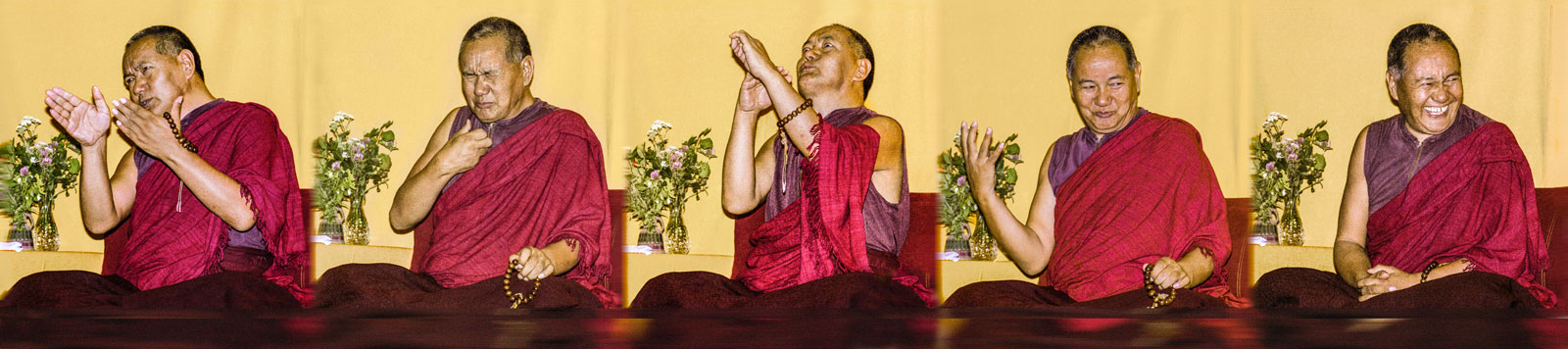
When we practice thought training, experiencing problems becomes a cause for finishing the results of negative karma
Lama Zopa Rinpoche gave these teachings on offering practices during a Cittamani Tara Puja at Amitabha Buddhist Centre, Singapore in 1992.
A commentary on Vajrasattva meditation and recitation as a purification practice.
His Holiness the Dalai Lama discusses a range of topics,including karma, other religions, depression, Buddhist tenets and the mind.
After attaining enlightenment, how Buddha began teaching the spiritual path to others, commonly known as turning the wheel of Dharma.
An interview with His Holiness the Dalai Lama about Buddhist teachings and practice
His Holiness the Dalai Lama responds to general questions about Buddhism from students at Tushita Meditation Centre, Dharamsala
Detailed instructions on the refuge preliminary practice, compiled and edited by Ven. Thubten Wongmo
Teachings prior to a refuge ceremony on topics including the suffering nature of samsara, refuge practice and precepts
The practice of prostrations to the Thirty-five Buddhas is a powerful method to purify past harmful actions and prevent unwanted sufferings in the future.
Extracts from teachings by Lama Zopa Rinpoche and Lama Yeshe on the practice of Vajrasattva.
Three discourses on how to subdue the mind and achieve enlightenment by practicing the graduated path (lamrim).
Teachings from a Mani retreat held at Institut Vajra Yogini, France, in 2009.
Excerpts from Lama Zopa Rinpoche’s How to Practice Dharma: Teachings on the Eight Worldly Dharmas. In this book, Rinpoche explains how desire and attachment are the cause of our problems and how to abandon these negative minds in order to find perfect peace and happiness.