
E-letter No. 265: July 2025

Dear Friends,
Thank you for your generous support during Chokhor Duchen! If you missed our special mailing earlier this week commemorating the Buddha’s first teaching and would still like to make an offering, you can do so anytime on our website. It’s only through the kindness of donors like you that we’re able to offer free Dharma books around the world.
In this issue, you’ll find a rich selection of new offerings from the archive: a new video and podcast, the latest installment of the Big Love audiobook heart project, recently published teaching excerpts from Big Love and new entries in Lama Zopa Rinpoche’s Online Advice Book. We’re also happy to share that Lama Zopa Rinpoche’s book How to Practice Dharma is now available to read in full on our website, with an excerpt featured as this month’s teaching. Plus, discover newly published teachings on our auxiliary website, Teachings from Tibet, and find out which great teachers are on tour this year.
From the Video Archive: Impermanence Comes First
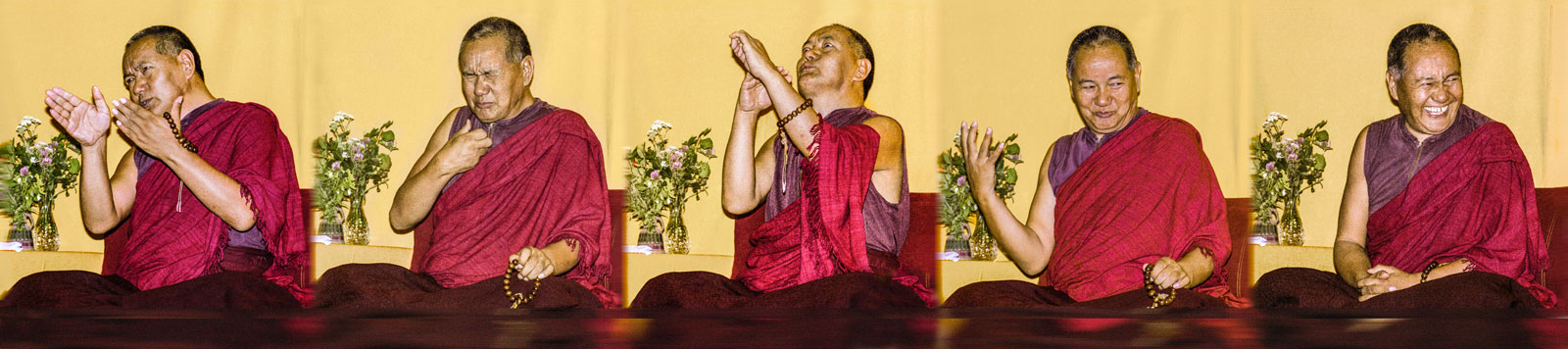
This month from the video archive, Lama Zopa Rinpoche discusses the importance of realizing impermanence and how it is the foundation of all other practices. This excerpt is from teachings Rinpoche gave during the first Light of the Path retreat hosted by FPMT's Kadampa Center in Raleigh, North Carolina, 2009. You can also find the entire 2009 Light of the Path video teachings on the Rinpoche Available Now page on the FPMT website.
Visit and subscribe to the LYWA YouTube channel to explore our complete video collection of teachings by Lama Yeshe and many from Lama Zopa Rinpoche, available from our archive. For many more videos of Lama Zopa Rinpoche's teachings, visit the FPMT YouTube channel.
From the LYWA podcast: The problem is coming from inside your mind
Somebody who helps you to destroy your ego is so precious and shows you unbelievable kindness. This kindness you should feel deeply from the bottom of your heart.
—Lama Zopa Rinpoche

This month on the LYWA podcast, Lama Zopa Rinpoche illustrates the way that all suffering and happiness are created by the mind. Rinpoche then shares a story of how, as a young monk, Rinpoche applied this wisdom to a teacher who had challenged his ego, thereby changing his view of the teacher from an enemy to one most kind. From teachings given at the Thirty-third Kopan Meditation Course, held at Kopan Monastery, Nepal, in 2000. You can read along with the transcript on our website.
The LYWA podcast contains hundreds of hours of audio, each with links to the accompanying lightly edited transcripts. See the LYWA podcast page to search or browse the entire collection by topic or date, and for easy instructions on how to subscribe.
The BIG LOVE AUDIOBOOK HEART PROJECT
We’re happy to share the latest audiobook installment of Big Love: The Life and Teachings of Lama Yeshe, written by Adele Hulse. This heartfelt project, organized by Janet Brooke, features narrations recorded by close friends of the late Åge Delbanco (Babaji) during his final days, so he could listen to the book. Babaji was one of Lama Yeshe’s earliest students. This audiobook offers a unique opportunity to hear this extraordinary life story read by those who lived it, especially meaningful if you don’t yet have a print copy.
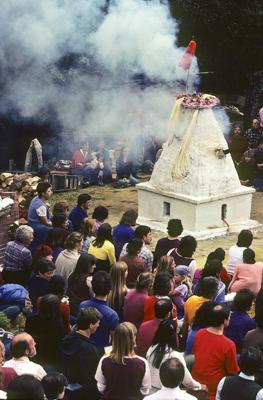
This month from the Big Love Heart Project, listen to Chapter 22, 1984: We don't have the karma anymore. Chapter 22 is the last chapter of Big Love and chronicles many challenging events that year, including the process of Lama's decline and death, Lama’s cremation ceremony in California, and how students all over the world showed their undying devotion to Lama. Narrated by Richard Price, Lennie Kronisch, Sharon Gross and Bev Gywnn.
What's New On Our Website

This month, we’ve added two new teachings from Lama Yeshe, excerpted from Big Love: The Life and Teachings of Lama Yeshe. In our first excerpt, Intellectual Understanding Isn’t Enough, Lama Yeshe explains how we reinforce our delusions through repetition, and that contemplation with method and wisdom provides the experience we need for successful meditation. In the second, Transforming into Avalokiteshvara, Lama Yeshe discusses the incredible benefits of transforming ourselves into Avalokiteshvara—a method to loosen ego grasping and experience nonduality.
Visit our new Big Love Teaching Excerpts webpage, where you’ll find a growing selection of teachings featured in the book. The teachings are organized by chapters, with easy navigation links. Be sure to check back often, as we’re adding new content every month!
We are also happy to announce that we have posted How To Practice Dharma on our website. First published in 2012 and edited by Gordon McDougall, this book deals with the eight worldly dharmas: essentially how desire and attachment cause us to create problems and suffering and how to abandon these negative minds in order to find perfect peace and happiness. Read an excerpt in our monthly teaching below. You can read the entire book online, order a free print copy, download the PDF, or get the ebook from your favorite ebook vendor. LYWA members can download the ebook for free from our Members' area.
- Practices for the End of Life: This advice was sent to a student whose husband was near death.
- Transforming Depression Through Practice: A student was struggling with depression and suicidal thoughts. Rinpoche gave this advice, which includes a list of preliminary practices and commentary on how to do them.
- Heavy Life Obstacles: Practices for a student facing life-threatening challenges due to karma. The advice includes an explanation of nyung nä practice.
- Prayers for Green Card: A student asked Rinpoche how to remove obstacles to a green card for permanent residency in the United States.
You can always find a list of all the newly posted advices from Lama Zopa Rinpoche on our website.
Experience the wisdom of great masters
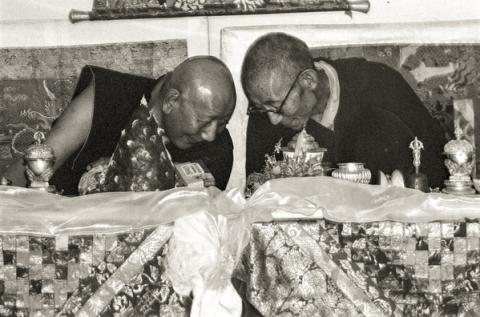
Visit our auxiliary website, Teachings from Tibet, inspired by our popular publication, Teachings from Tibet, and built on decades of teaching transcripts we've received from some of the greatest Tibetan masters. It features teachings from exceptional Tibetan lamas such as H.E. Ling Rinpoche, H.E. Trijang Rinpoche, H.E. Zong Rinpoche, Khunu Lama Rinpoche, and others.
As always, thanks for all your love and support.
Big love,

Director Nick Ribush
and the LYWA team
THIS MONTH'S TEACHING: All suffering comes from the mind

To have a peaceful, happy life free from problems, we must first find the cause of our suffering and then do whatever is needed to eliminate that cause. As the cause of all our problems is the thought of the eight worldly dharmas, the only way to develop true happiness is to destroy this evil thought. We need to flush it from our minds. We need to be brainwashed! Once it’s washed out, then there’s true freedom, true peace. As long as it sits there in our mind there can never be freedom.
We normally think of desire as good, but if we really examine the nature of desire we’ll see that its nature is suffering. We can sometimes recognize this when attachment is so strong it overpowers us. At that time we can actually feel it as physical pain, and because we’re unable to let go, that makes the emotional pain associated with it even worse.
If we can actually see that the thought of the eight worldly dharmas that lives in our own mind is the real culprit, we can learn how to control our mind, to disengage ourselves from the influence of worldly concern. Then we’re really studying the best psychology. Without understanding the cause of life’s problems, how can we find practical solutions that really benefit and bring peace and happiness in this life?
The Kadampa geshes were great meditators who actualized the graduated path to enlightenment and completely freed themselves from this emotional mind, from all thought of the worldly dharmas, the dissatisfied mind of desire. In their texts, when they explain real happiness, real peace, they’re talking from their own experience. They explain that whether we experience happiness or suffering is entirely determined by our motivation and nothing else. Everything depends on what type of motivation we have. If our motivation is virtuous, our action becomes virtuous and we experience happiness; if our motivation is nonvirtuous, our action becomes nonvirtuous and we experience suffering.
Both samsara—these circling aggregates, the association of body and mind that is in the nature of suffering—and nirvana—the ultimate happiness of liberation—come from our motivation. That which we call hell and that which we call enlightenment also come from our motivation. Everything comes from our motivation.
Therefore, the mind is the creator of everything. From our positive or negative motivations come the actions that cause all the happiness and suffering that we experience. If we do all of our actions out of desire, clinging to this life, since our motivation is nonvirtuous, our actions become nonvirtuous—they become only the cause of suffering, not the cause of happiness. Actions we do with a motivation unstained by desire clinging to this life become the cause of happiness.
In this way, all problems are created by the mind. Of the four desirable objects and the four undesirable ones, from the objects’ side there is no difference: the first four good, the second four bad. It is our attachment to worldly pleasure that labels them as such. We like comfort, gifts, friends, praise, reputation and so forth, so we interpret those objects as good; we don’t like discomfort, enemies, blame and so forth, so we interpret those objects as bad. Problems arise from the way that we judge situations. The same person is sometimes a friend, sometimes an enemy.
Not only that, but, as Dharmakirti explains in his commentary on Dignaga’s Compendium of Valid Cognition, the mind controlled by the thought of the eight worldly dharmas is obscured and unable to get to the point, to see things as they actually are. Calm water is very clean and totally transparent, but we can’t see through dirty, disturbed water at all. Similarly, the attached mind can’t stay still; it’s always disturbed and obscured, like a sky filled with dust from a strong wind—everything is indistinct and blurred.
And because of that, even if we do something for somebody else, it interferes with the sincere attitude to benefit others without any expectation of getting something in return. When our mind is occupied by attachment, there’s no space for unconditional loving kindness and compassion for that sentient being.
Excerpted from the chapter on The Nature of Samsara in Lama Zopa Rinpoche’s How to Practice Dharma, now available online. Edited by Gordon McDougall.