
Intention: Your Mental Attitude
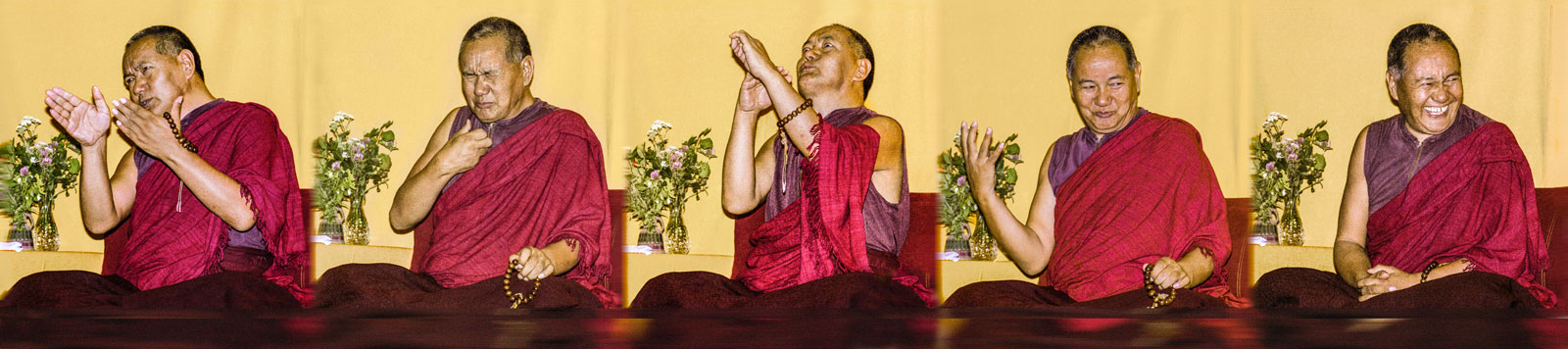
Lama Yeshe discusses the importance of setting the proper intention and the problems associated with the discriminating, narrow mind. This teaching is from Bodhgaya, India, 1974, and is published in chapter 12 of Big Love: The Life and Teachings of Lama Yeshe.

When we are not really wise but are instead narrow-minded, we generally think that what our mind is interested in is good, whereas what our mind isn’t interested in is bad. Even if we don’t actually put this thought into words, this attitude instinctively comes into our mind. So we should be careful.
Also, actions that arise from totally negative reactions are ignorant actions. However, if we do the same actions from thoughtful consideration, slowly, not hastily, they can be beneficial and lead to freedom. They can be a method, even though the action itself may appear outwardly to be totally ignorant. For example, you should wash your body every morning. According to some, washing the body can purify the traces of negativity. For a person who is devoted to the Buddhist path, that kind of method is a totally wrong conception. How can you wash away negativities by taking a bath? You can let go of your belief, or devotion, in that kind of doctrine by using your knowledge-wisdom. But in the case of a person who only practices morality—that is, who creates positive actions at the present time—there is no need to cause such a person to let go of his devotion to this method.
Many times it seems that European people always tell others whatever they believe because they think that is the only way. For example, saying that the Mahayana yoga tantra path is the only way to liberation. They always share these views with other people without checking others’ minds. “This way is the only way; not your method.” This is extreme; sometimes European people are extreme. They just go “boom” on others. They tell others whatever they believe, as if that alone is right. My point is that this is wrong, unless you have a good understanding that it will result in a good reaction in the other person’s mind. Then it is OK. Otherwise, you make other people more crazy. Instead of a good feeling, it becomes something negative, doesn’t it? You know this. We cannot say that one particular action is good for everybody. For example, what if you were to say that actualizing the wisdom of right view shunyata is the only way to reach perfect liberation? It is; this is true. But you should not communicate that kind of information to a person who isn’t ready for it. Instead of being beneficial it becomes totally negative, even though the information is completely correct. That’s why we say that what is right and what is wrong depends on the individual mind.
So you see, with narrow-mindedness, when you ask anyone, any samsaric sentient being, if something is good, if it is something outside their experience, they will often say it is bad. That’s how you can understand the human mind. The small mind is always complaining; it blames other people. Because it has little understanding, it is always judging. It will always judge another person who behaves differently from you as wrong. That causes great problems. This is a kind of discrimination. This is similar to how samsaric society thinks that everything should be uniform: everybody should sit the same, act the same, think the same. If you believe that way, then when someone acts differently, that person is criticized. He or she is seen as wrong. But there is no way that we can make samsaric life completely uniform in this way. We cannot; it is impossible. Why? Because every individual’s mind is different. Even if you try for such uniformity, it is wrong. You are hopeless.
This kind of samsaric society’s thinking is hopeless. You cannot think like this, because if you do, you are no different from samsaric society people. You are no different because you still have a narrow mind, and that has nothing to do with being a Dharma person. What is the purpose of judging he does this, she does that? There is no purpose. What purpose is there, for example, for the people of Kathmandu to talk every night about what people of other societies do or don’t do? You check up! Every night they only talk about other people’s actions. What is the point? It is a waste of time. It is really simple. I’m not complaining; just check up your own experience.
Therefore, according to Lord Buddha’s teaching, the discriminating mind is really the greatest cause of our problems. You should change that attitude. It’s better that you go with reality, the middle way. If you do not change your mental attitude, then what purpose do you think there is in practicing the Dharma? You should be especially careful regarding ideas about religions: this religion is good, this religion is bad and so on. How do you know what is good and what is bad? Especially, how do you know what is good or bad for the person you are talking to? Is it possible to judge whether this religion is good because this man in this religion is good? Be very careful.