
E-letter No. 266: August 2025

Dear Friends,
Thank you for reading our monthly e-letter. We have a lot of news and resources for you this month!
In this issue, we’re excited to announce another new Lama Zopa Rinpoche book from Wisdom Publications—plus a special gift for LYWA Members! We’re also introducing a new audio feature that makes the Lamrim Year teachings even more accessible.
From the Dharma archives, you’ll find several short video excerpts of Lama Yeshe, a podcast on acceptance, updates on our print-on-demand titles, the final installment of the Big Love audiobook Heart Project, and newly published Big Love teaching excerpts on our website. There’s also a new Brazilian Portuguese LYWA translation, along with fresh entries in Lama Zopa Rinpoche’s Online Advice Book.
Keep reading to learn more about the Family Feeling Project, and don’t miss this month’s featured teaching from Lama Zopa Rinpoche on not taking this life for granted. Thanks for being here with us!
Preserving the Teachings and Celebrating members
We are deeply grateful for the generosity of our community, which makes it possible to share the teachings of Lama Yeshe and Lama Zopa Rinpoche so widely. Along with your continued support, we invite you to consider legacy giving—an enduring way to ensure these precious teachings benefit future generations. You can learn more about legacy options here on our website.
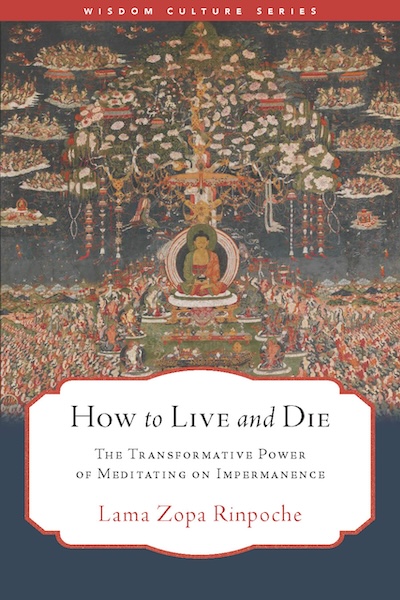
We are also delighted to share that LYWA Members are invited to receive another complimentary book this year—our fourth gift publication of 2025! This time we are offering Lama Zopa Rinpoche’s latest Wisdom Publications title: How to Live and Die: The Transformative Power of Meditating on Impermanence. In this profound and practical guide, Rinpoche shares traditional meditations on impermanence and death, showing us how to face death without fear and recognize it as an essential part of life.
If you are a LYWA Member and would like to receive a copy, please reply to this email with your preference:
- Print edition (include your full shipping address and phone number)
- eBook edition
Let us know by September 10 so we can ship your book by late September. Thank you so much for your ongoing support and generosity.
If you’d like to learn more about becoming a LYWA Member—supporters who contribute $1,000 or more, either as a single gift or through cumulative donations, and who enjoy benefits such as receiving the latest LYWA titles and Wisdom Publications titles by Lama Zopa Rinpoche and Lama Yeshe—please visit the LYWA Membership page on our website.
From the Video Archive: Lama Answers Questions
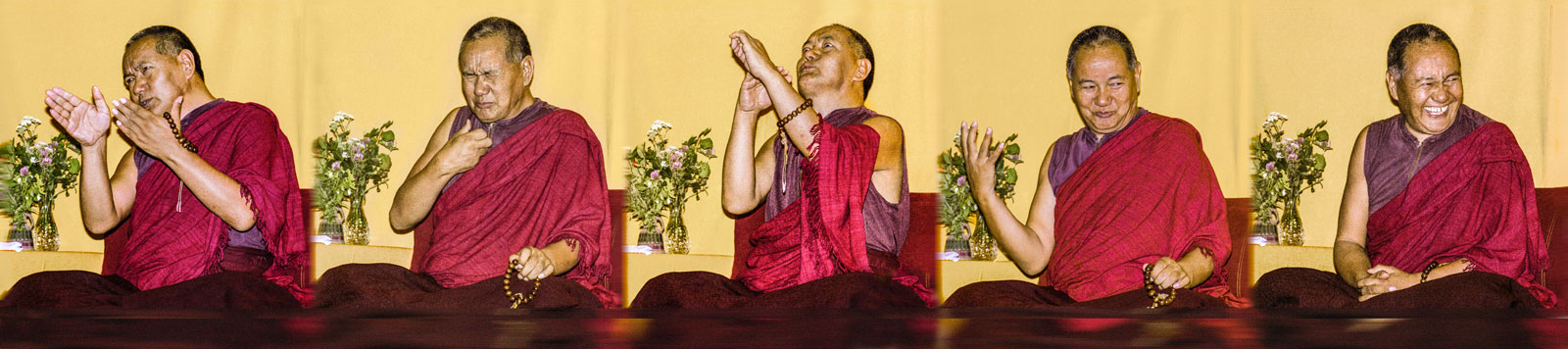
This month from the video archive, we're offering three short excerpts from Lama Yeshe’s extensive commentary on the Heruka Vajrasattva Tsog practice given at Vajrapani Center, California, in 1983. In Transformation Through Action: The Purpose of Fire Puja, Lama offers a practice commentary on how to perform a fire puja; in Great Risk, Great Reward: Taking Tantric Vows, Lama addresses a student’s concerns about breaking the tantric vows; and in Good vs Evil: The Trouble with Concrete, Lama explains why Buddhism appears to distinguish between good and evil. We also invite you to watch Lama Yeshe's complete commentary on the LYWA YouTube channel.
Visit and subscribe to the LYWA YouTube channel to explore our complete video collection of teachings by Lama Yeshe and many from Lama Zopa Rinpoche, available from our archive. For many more videos of Lama Zopa Rinpoche's teachings, visit the FPMT YouTube channel.
On the LYWA Podcast: Dealing with Difficult Situations
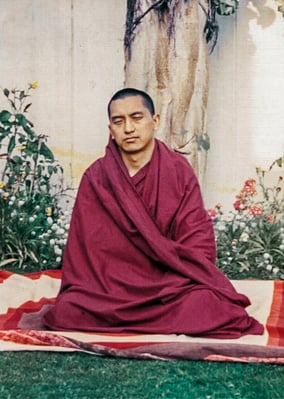
You have to accept your own karma.
The minute you accept your own karma, you cut the problem.
—Lama Zopa Rinpoche
As Lama Yeshe once said, “Once a situation has manifested, the best thing to do is to accept the fact and deal with it.” In this month’s Lama Yeshe Wisdom Archive podcast, Lama Zopa Rinpoche explains how we can use such challenging situations to develop compassion and to cut the root of concepts. These teachings were given at the Thirty-third Kopan Meditation Course, held at Kopan Monastery, Nepal, in 2000. You can also read along with the transcript on the LYWA website.
The LYWA podcast contains hundreds of hours of audio, each with links to the accompanying lightly edited transcripts. See the LYWA podcast page to search or browse the entire collection by topic or date, and for easy instructions on how to subscribe.
The BIG LOVE AUDIOBOOK HEART PROJECT
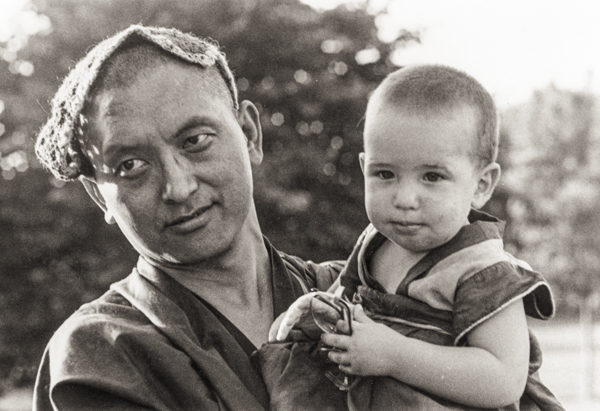
We’re happy to share the latest and last audiobook installment of Big Love: The Life and Teachings of Lama Yeshe, written by Adele Hulse. This heartfelt project, organized by Janet Brooke, features narrations recorded by close friends of the late Åge Delbanco (Babaji) during his final days, so he could listen to the book. Babaji was one of Lama Yeshe’s earliest students. This audiobook offers a unique opportunity to hear this extraordinary life story told by those who lived it, especially meaningful if you don’t yet have a print copy.
This month the Big Love Audiobook Heart Project presents the final chapter, narrated by Lennie Kronisch. The Epilogue recounts the discovery of Lama Yeshe’s incarnation, Ösel Hita Torres, including anticipatory dreams, portents, and confirmation by His Holiness the Dalai Lama, and the joy with which Lama Yeshe’s students around the world welcomed him.
Access Lamrim Year Meditations with New Audio
It feels
as if you had read our minds—this is exactly what we needed!—Susana P., reader feedback
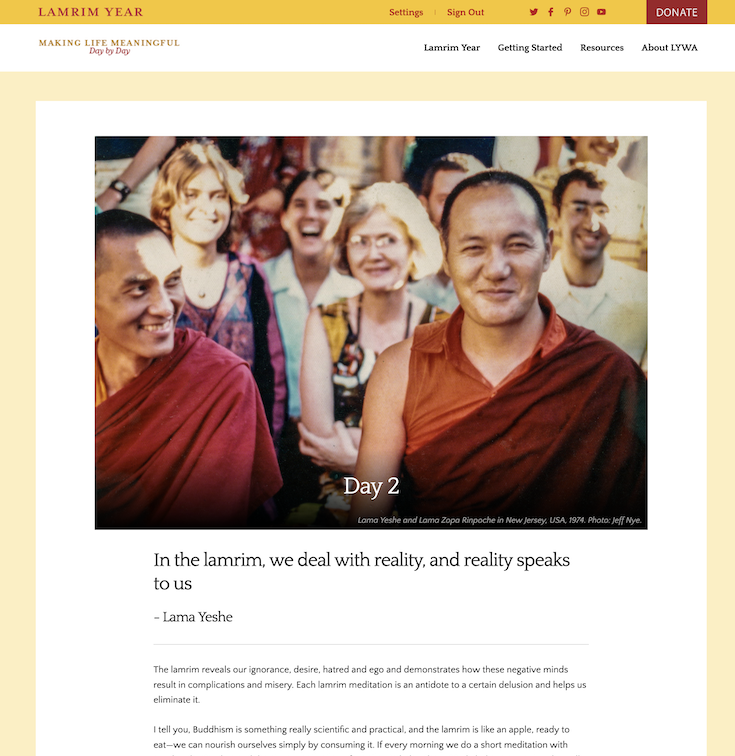
We're excited to announce the addition of audio recordings of each entry to the Lamrim Year Companion site!
Visit the free Lamrim Year Companion website and sign up to access the daily meditations wherever you are, from your computer or mobile device. We've recently added audio recordings of each entry, making it easier to access your daily meditation anywhere.
Lamrim Year is an essential guide for meditators who want to develop their mind in the graduated path to enlightenment (lamrim). This unique study program provides a 365-day outline of the graduated path in a clear, practical format that is suitable for both individual and group practice. The daily quotes and text have been selected from four decades of teachings by Lama Yeshe and Lama Zopa Rinpoche, and offer a taste of their teaching style and scope.
What's New On Our Website
This month we’ve added two more titles, Lamrim Year and Sun of Devotion, Stream of Blessings, to our growing collection of print-on-demand books. You can now browse our updated print-on-demand catalog on our website and order a paperback copy directly through Amazon. Be sure to visit the Amazon website in your region to get the best local price, including shipping.
We’ve also added two new teachings from Lama Yeshe, excerpted from Big Love: The Life and Teachings of Lama Yeshe. In our first excerpt, Transforming Our Surroundings, Lama Yeshe explains how we can be happy anywhere by transforming our environment and the situations we encounter into our mandala. In the second teaching, Limitless Love, Lama Yeshe discusses the Medicine Buddha and cultivating a healthy mind of love and compassion.
Visit our new Big Love Teaching Excerpts webpage, where you’ll find a growing selection of teachings featured in the book. The teachings are organized by chapters, with easy navigation links. Be sure to check back often, as we’re adding new content every month!
We're also pleased to announce the release of another new Brazilian Portuguese translation of a classic LYWA title by Lama Yeshe, Ego, Attachment and Liberation. This edition was published by the Translators Group at Centro Shiwa Lha, the FPMT center in Rio de Janeiro, Brazil. You can download the free PDF here.
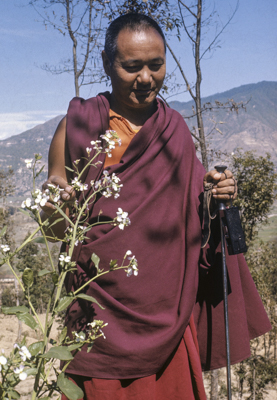
Don't miss out on the new entries to Lama Zopa Rinpoche’s Online Advice Book we've added this month. Each year, we include over 100 new pieces of advice on various topics, bringing the total to more than 2,600 entries now available on our website.
- Sur Practice to Benefit Others: Since early childhood, a student had seen and conversed with spirits, who often came to that person for guidance. The student said many people found comfort and closure through this, while others struggled with the concept of future lives.
- Animal Liberation for Long Life: Rinpoche advised a student with life obstacles to liberate animals and recite the Long-life Sutra. Rinpoche also explained how to bless the liberated animals by taking them around holy objects.
- A Most Precious and Meaningful Life: After completing many practices, a student offered them to Rinpoche and asked what they should do next. Rinpoche responded with heartfelt thanks and advice for further practices, emphasizing the need for bodhicitta motivation.
You can always find a list of all the newly posted advices from Lama Zopa Rinpoche on our website.
The Family Feeling Project: Free Books, Free Shipping

In 2025, LYWA launched The Family Feeling Project to make the precious teachings of Lama Yeshe and Lama Zopa Rinpoche more accessible throughout the worldwide FPMT network. Thanks to the generosity of benefactors and ongoing donor support, we are now able to ship LYWA publications (excluding Big Love) free of charge to any FPMT center, study group, project, or service anywhere in the world.
We’ve already begun sending regional and individual shipments—from study groups in Finland to centers in New Zealand—and the FPMT family everywhere is taking advantage of this wonderful opportunity. Each affiliate can request up to two boxes of free LYWA titles per year, and we also offer larger regional shipments depending on stock availability. Please reach out to us for more information!
Our hope is that every visitor to an FPMT location can take home a free LYWA book to inspire and support their Dharma practice and to connect more deeply with the FPMT lineage. To learn more about all of our projects, visit our Current Projects page. It is through your kindness and generosity that we are able to extend these invaluable teachings to every corner of the world.
As always, thanks for all your love and support.
Big love,

Nick Ribush
Director and the LYWA team
THIS MONTH'S TEACHING: The Mind Is Like a Wish-Granting Jewel

This human life is so unbelievably precious. What we can do is not just for ourselves. We are able to not just liberate ourselves but the numberless sentient beings from the oceans of samsaric sufferings. We are able to liberate every single sentient being in each realm from the oceans of sufferings. That is great happiness. That is amazing! We can do that by developing our mind. Then, we can bring them to the peerless happiness of enlightenment.
We cannot see the mind; it is colorless, shapeless, formless, but this is what we can do. We can use this mind to bring all sentient beings to enlightenment with bodhicitta. When we open our mind to see all we can do with our life, it is so precious.
Otherwise, life in the West has no meaning; there is nothing to enjoy, there is no meaning. Most people have no idea. They think there is no life after we die. Although some might not be sure, this is not the main subject in society; it becomes like it’s hidden. But the most important thing to discover is what is right and what is wrong! It’s the most important thing to discover but it’s like it’s hidden. Generally Western people do not have a good idea of this, but this is something we have to discover. Then, we can get rid of suffering and achieve happiness. In this way, we understand the meaning of life. Unless we are with people who can explain all this, nobody can explain what life is all about. Then, it becomes a kind of hidden subject.
We all have to die; we all have to go through that. Because we have not had a direct perception of emptiness that ceases the seed of karma and delusions, the cause of samsara, we all have to die. If we could cease the seed of karma and delusions, that would cease true suffering: the suffering of rebirth, of old age, of sickness and of death. We could cease this by actualizing the four noble truths, by actualizing the true path.
We are in a society where nobody knows about life. We cannot get answers from our society. It is most important to learn but it is hidden. Nobody can explain it to us. People are totally hallucinated, so that is very, very sad.
Of the mind, there is the general mind and then the mind that has buddha nature. At this time, we have a human mind. There is so much potential, but the people around where we were born have no Dharma understanding at all—in fact, their way of thinking is opposite to the Dharma. Therefore that incredible potential we all have, like a wish-granting jewel from ocean, is totally wasted.
To find a wish-granting jewel in the ocean, first of all we need a lot of merit. Wheel-turning kings and bodhisattvas are able to do this. After they clean it in three ways, on the fifteenth day [of the lunar calendar] they put it on top of a banner and, when people pray for any of the material things of this life, everything they pray for gets materialized. The main thing is people’s good karma. This is the condition. Sai Baba does this, where some people get gold chains or watches but most get ashes. This is from good karma. With a wish-granting jewel, whatever we pray for in this life, everything gets materialized.
Our human mind is like this. We can achieve any happiness: the happiness of future lives, liberation from samsara, even enlightenment, whatever we need. This mind with buddha nature is like a wish-granting jewel. It’s incredible what we can do. There are so many different levels of happiness when we actualize the path, and we can achieve all that. But in Western society, people think totally the opposite to the Dharma. If we try to live our life according to the Dharma, people do not accept that; they think we are crazy. It’s right, but right is regarded as wrong! Right is regarded as wrong because of society, culture, all those concepts.
The human mind has the potential to create all the happiness up to enlightenment. What the Buddhadharma offers is the complete method. By meeting the lamrim, we learn the correct method, with nothing wrong. Everything shows us how to achieve enlightenment.
You are so fortunate. Having been at this course, your eyes have been opened. You are using another eye, your wisdom eye, which has opened to discover all this. I think there must be some karma, some Kopan karma, that has brought you to Nepal. It is a very poor place compared to the West, but thousands of years ago it was an incredible holy place. Shakyamuni Buddha gave the prediction that so many beings would become enlightened in Nepal. So many holy beings have achieved different things here. Milarepa achieved different realizations in Nepal. Anyway, it’s your karma and Kopan’s karma to have this one-month course together. We still have ten days, right? Ten days.
Ani Karin has been leading it for so many years. There is karma from your side—all you people coming from around the world—and karma from Kopan’s side, from Ani Karin’s side. This is what happened. Isn’t it interesting? Without the karma to experience it, it cannot happen from our side. There’s no way. So, it takes both sides. Both sides need the karma.
Excerpted from Lecture 6, Kopan Course No. 51, Kopan Monastery, Nepal, November-December 2018. Transcribed and edited by Ven. Joan Nicell, and subsequently lightly edited by Gordon McDougall. The edited transcript was published on our website and as an ebook in February 2025, as part of the Kopan eBook Project.