
Intention: Your Mental Attitude
Lama Yeshe discusses the middle way attitude.
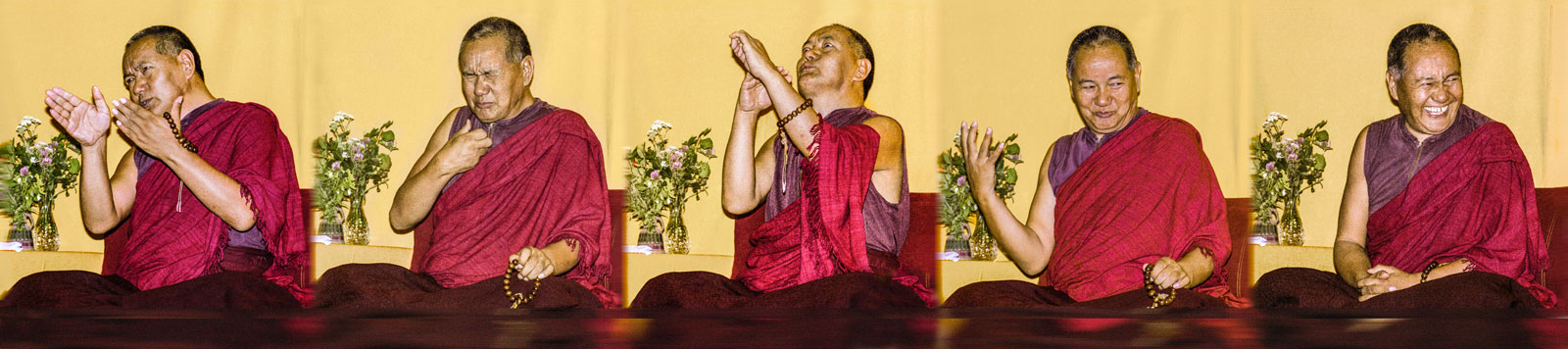
Lama Yeshe discusses the middle way attitude.
Lama Yeshe presents the antidote to the fragmented, dualistic mind.
Lama Yeshe teaches on Nagarjuna's Letter to a Friend and the importance of developing patience in situations where strong emotions arise.
Lama Zopa Rinpoche advises how to integrate Dharma into our everyday life in this teaching excerpted from Kopan Course No. 40.
In this teaching Rinpoche advises the importance of protecting our mind from anger, attachment and ignorance.
Lama Zopa Rinpoche teaches that Dharma practice needs continual effort for a long time in order to achieve liberation and enlightenment, in this excerpt from the 39th Kopan Course.
In this teaching, Lama Zopa Rinpoche explains that instead of ending our life by committing suicide, we can use this precious human rebirth to bring benefit and happiness to ourselves and others.
In this video extract, Lama Zopa Rinpoche explains that depression and anxiety can be overcome by practicing the good heart and cherishing others instead of oneself.
In this short excerpt from the 50th Kopan Course, Lama Zopa Rinpoche explains the benefits of having positive messages, mantras and Namgyälma protection on his car.
A talk by Tenzin Ösel Hita on unconditional love and how to practice Dharma.
Tenzin Ösel Hita addresses a wide range of topics including education, masculinity, patience, discipline, jealousy and anger in this Dharma talk.
In this talk, Tenzin Ösel Hita discusses the inner values which enable us to live a meaningful, peaceful and harmonious life.
How to make eating the cause of enlightenment for oneself and all other sentient beings. Through the Mahayana practice of offering the food we eat, our lives become most beneficial, not only for ourselves but for all sentient beings.
Advice for people who are contemplating suicide. Rinpoche explains how to use depression on the path to enlightenment, by changing our focus from self to others.
Advice on how to integrate the three principal aspects of the path—renunciation, bodhicitta and right view (of emptiness)—into our working life.